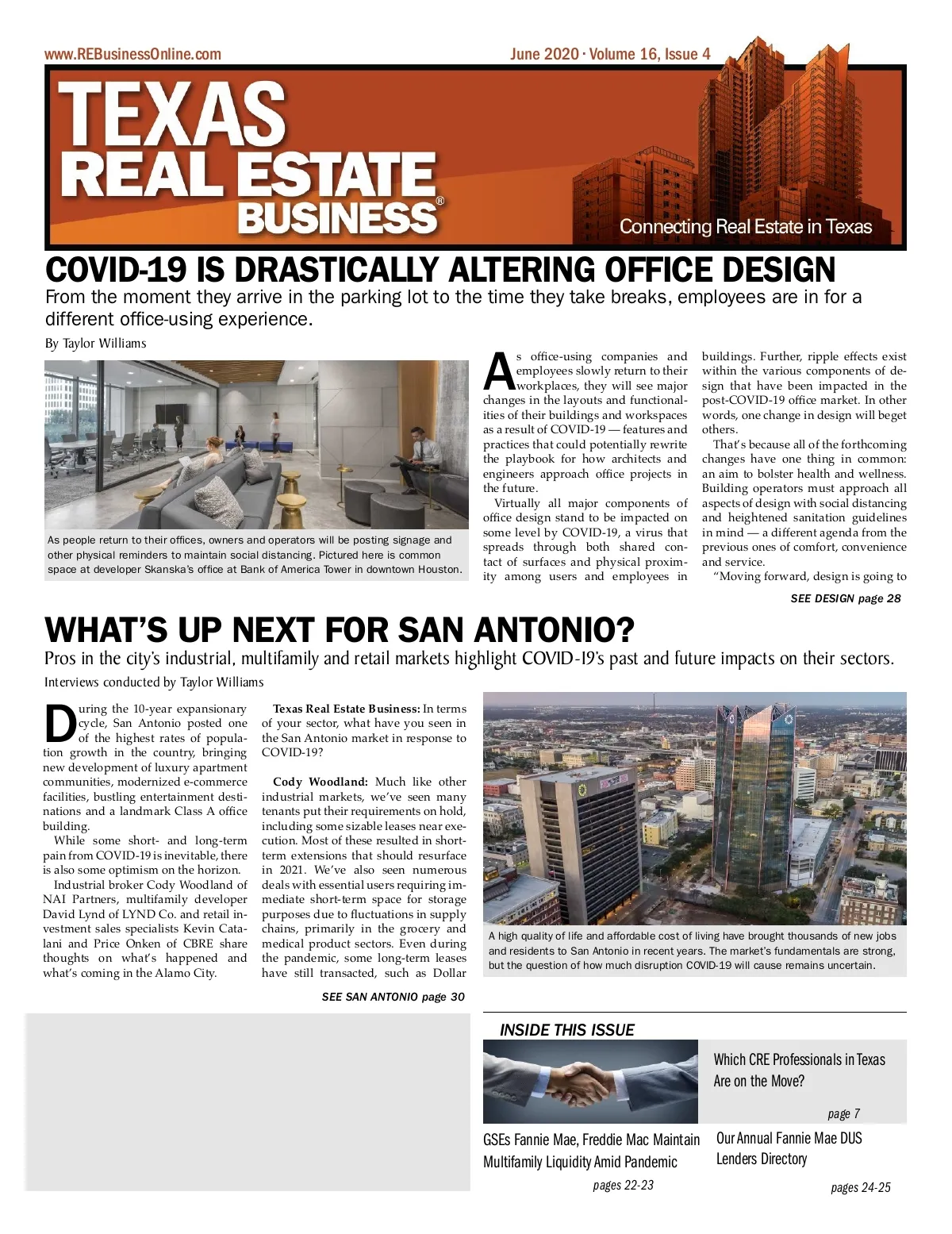
www.REBusinessOnline.com June 2020 • Volume 16, Issue 4 COVID-19 IS DRASTICALLY ALTERING OFFICE DESIGN By Taylor Williams From the moment they arrive in the parking lot to the time they take breaks, employees are in for a different office-using experience. A As people return to their offices, owners and operators will be posting signage and other physical reminders to maintain social distancing. Pictured here is common space at developer Skanska’s office at Bank of America Tower in downtown Houston. s office-using companies and employees slowly return to their workplaces, they will see major changes in the layouts and functional-ities of their buildings and workspaces as a result of COVID-19 — features and practices that could potentially rewrite the playbook for how architects and engineers approach office projects in the future. Virtually all major components of office design stand to be impacted on some level by COVID-19, a virus that spreads through both shared con-tact of surfaces and physical proxim-ity among users and employees in buildings. Further, ripple effects exist within the various components of de-sign that have been impacted in the post-COVID-19 office market. In other words, one change in design will beget others. That’s because all of the forthcoming changes have one thing in common: an aim to bolster health and wellness. Building operators must approach all aspects of design with social distancing and heightened sanitation guidelines in mind — a different agenda from the previous ones of comfort, convenience and service. “Moving forward, design is going to SEE DESIGN page 28 WHAT’S UP NEXT FOR SAN ANTONIO? Interviews conducted by Taylor Williams Pros in the city’s industrial, multifamily and retail markets highlight COVID-19’s past and future impacts on their sectors. D uring the 10-year expansionary cycle, San Antonio posted one of the highest rates of popula-tion growth in the country, bringing new development of luxury apartment communities, modernized e-commerce facilities, bustling entertainment desti-nations and a landmark Class A office building. While some short-and long-term pain from COVID-19 is inevitable, there is also some optimism on the horizon. Industrial broker Cody Woodland of NAI Partners, multifamily developer David Lynd of LYND Co. and retail in-vestment sales specialists Kevin Cata-lani and Price Onken of CBRE share thoughts on what’s happened and what’s coming in the Alamo City. Texas Real Estate Business: In terms of your sector, what have you seen in the San Antonio market in response to COVID-19? Cody Woodland: Much like other industrial markets, we’ve seen many tenants put their requirements on hold, including some sizable leases near exe-cution. Most of these resulted in short-term extensions that should resurface in 2021. We’ve also seen numerous deals with essential users requiring im-mediate short-term space for storage purposes due to fluctuations in supply chains, primarily in the grocery and medical product sectors. Even during the pandemic, some long-term leases have still transacted, such as Dollar SEE SAN ANTONIO page 30 A high quality of life and affordable cost of living have brought thousands of new jobs and residents to San Antonio in recent years. The market’s fundamentals are strong, but the question of how much disruption COVID-19 will cause remains uncertain. INSIDE THIS ISSUE Which CRE Professionals in Texas Are on the Move? page 7 GSEs Fannie Mae, Freddie Mac Maintain Our Annual Fannie Mae DUS Lenders Directory Multifamily Liquidity Amid Pandemic pages 22-23 pages 24-25
Texas Real Estate Business June 2020: Page 1