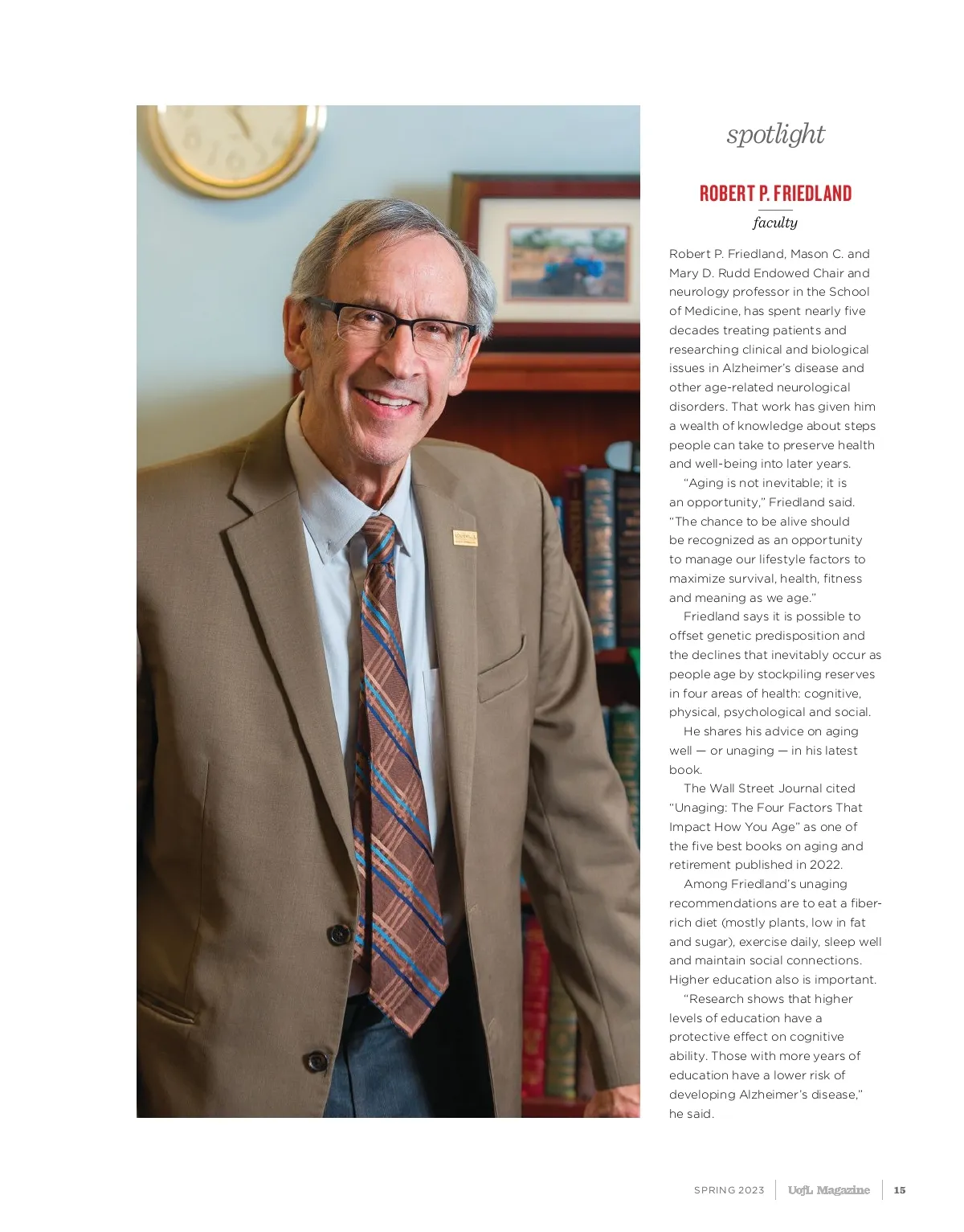
spotlight ROBERT P. FRIEDLAND faculty Robert P. Friedland, Mason C. and Mary D. Rudd Endowed Chair and neurology professor in the School of Medicine, has spent nearly five decades treating patients and researching clinical and biological issues in Alzheimer’s disease and other age-related neurological disorders. That work has given him a wealth of knowledge about steps people can take to preserve health and well-being into later years. “Aging is not inevitable; it is an opportunity,” Friedland said. “The chance to be alive should be recognized as an opportunity to manage our lifestyle factors to maximize survival, health, fitness and meaning as we age.” Friedland says it is possible to offset genetic predisposition and the declines that inevitably occur as people age by stockpiling reserves in four areas of health: cognitive, physical, psychological and social. He shares his advice on aging well — or unaging — in his latest book. The Wall Street Journal cited “Unaging: The Four Factors That Impact How You Age” as one of the five best books on aging and retirement published in 2022. Among Friedland’s unaging recommendations are to eat a fiber-rich diet (mostly plants, low in fat and sugar), exercise daily, sleep well and maintain social connections. Higher education also is important. “Research shows that higher levels of education have a protective effect on cognitive ability. Those with more years of education have a lower risk of developing Alzheimer’s disease,” he said. SPRING 2023 15
University of Louisville Spring 2023: Page 15