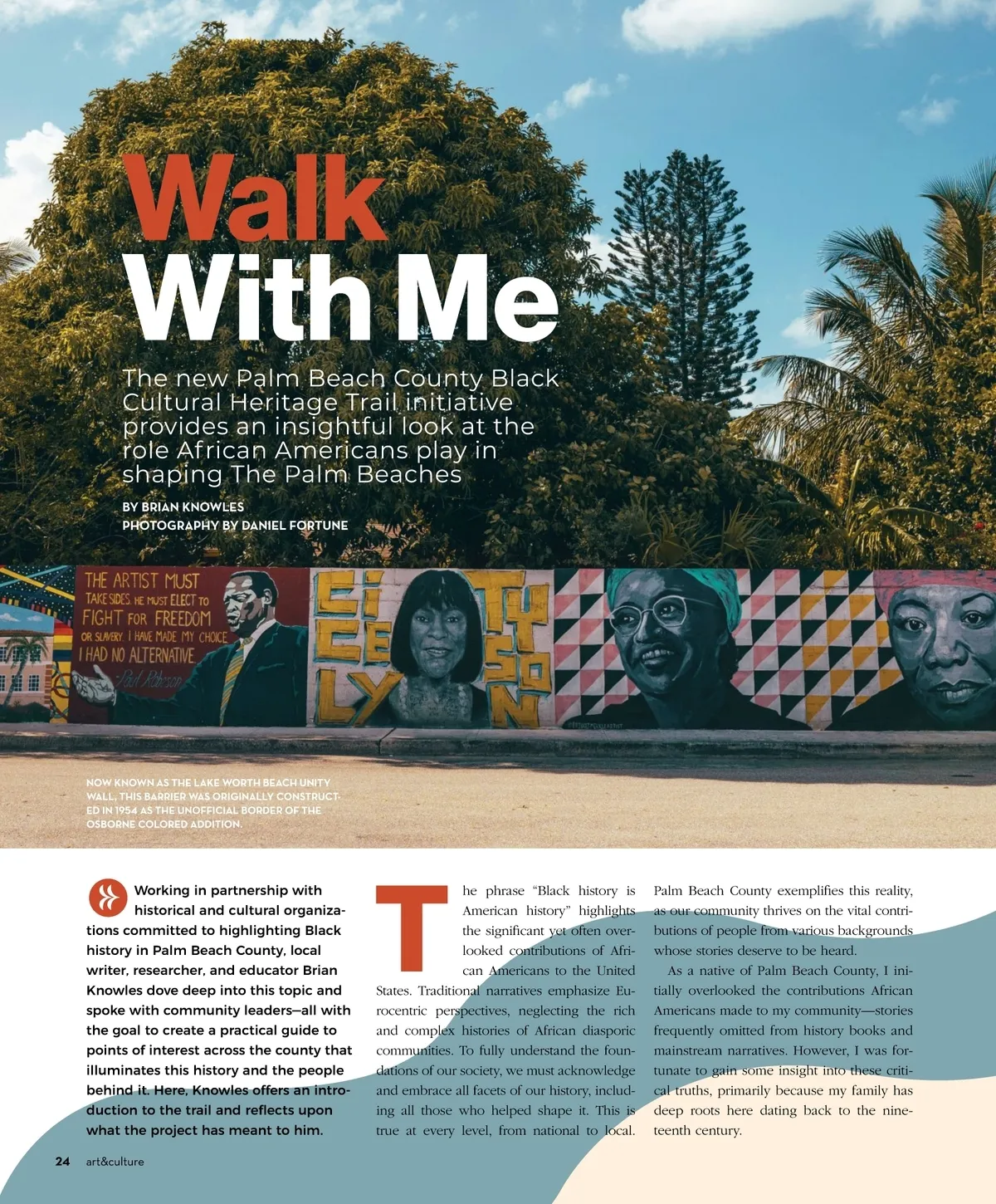
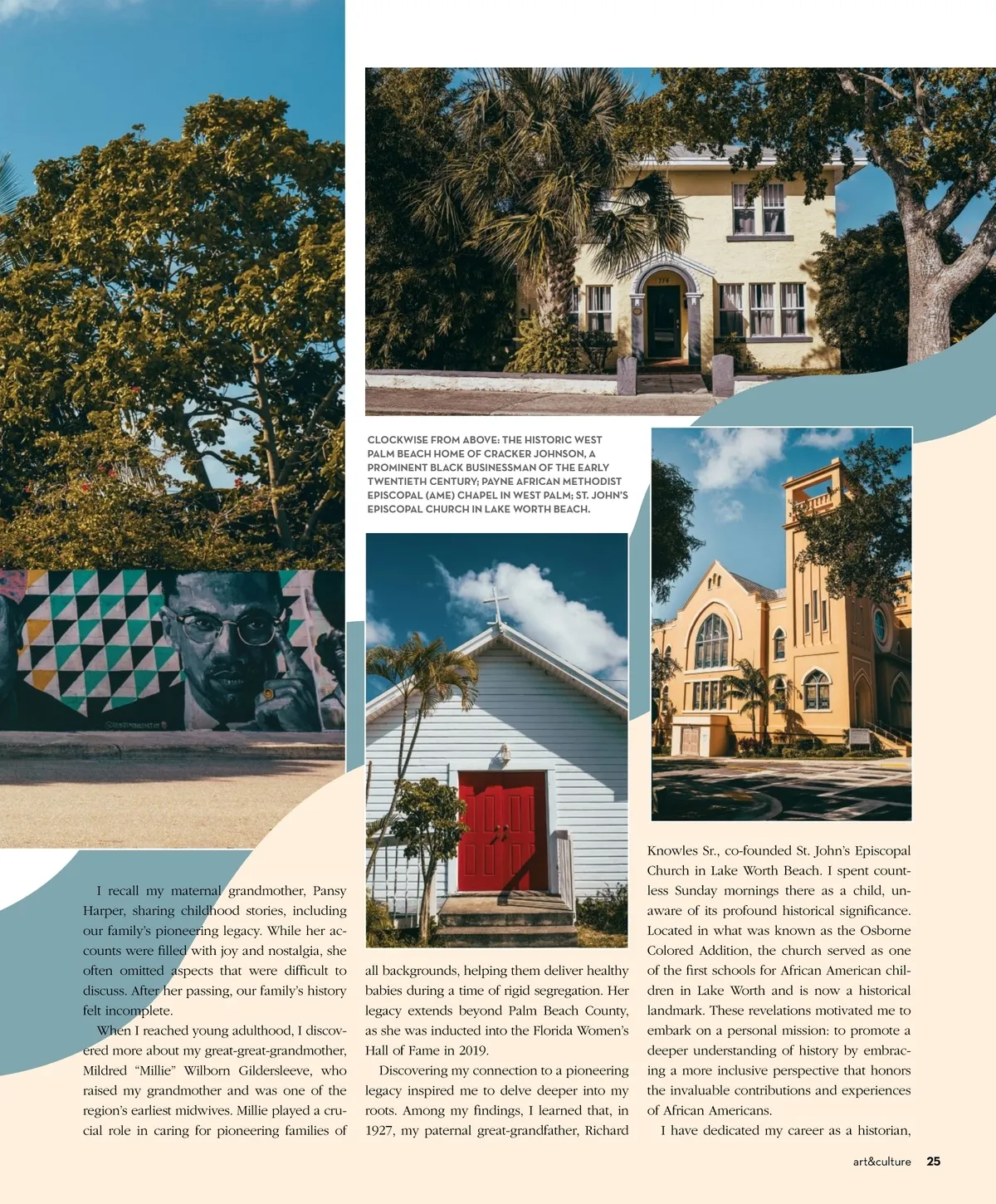
CLOCKWISE FROM ABOVE: THE HISTORIC WEST PALM BEACH HOME OF CRACKER JOHNSON, A PROMINENT BLACK BUSINESSMAN OF THE EARLY TWENTIETH CENTURY; PAYNE AFRICAN METHODIST EPISCOPAL (AME) CHAPEL IN WEST PALM; ST. JOHN’S EPISCOPAL CHURCH IN LAKE WORTH BEACH. I recall my maternal grandmother, Pansy Harper, sharing childhood stories, including our family’s pioneering legacy. While her ac-counts were filled with joy and nostalgia, she often omitted aspects that were difficult to discuss. After her passing, our family’s history felt incomplete. When I reached young adulthood, I discov-ered more about my great-great-grandmother, Mildred “Millie” Wilborn Gildersleeve, who raised my grandmother and was one of the region’s earliest midwives. Millie played a cru-cial role in caring for pioneering families of all backgrounds, helping them deliver healthy babies during a time of rigid segregation. Her legacy extends beyond Palm Beach County, as she was inducted into the Florida Women’s Hall of Fame in 2019. Discovering my connection to a pioneering legacy inspired me to delve deeper into my roots. Among my findings, I learned that, in 1927, my paternal great-grandfather, Richard Knowles Sr., co-founded St. John’s Episcopal Church in Lake Worth Beach. I spent count-less Sunday mornings there as a child, un-aware of its profound historical significance. Located in what was known as the Osborne Colored Addition, the church served as one of the first schools for African American chil-dren in Lake Worth and is now a historical landmark. These revelations motivated me to embark on a personal mission: to promote a deeper understanding of history by embrac-ing a more inclusive perspective that honors the invaluable contributions and experiences of African Americans. I have dedicated my career as a historian, art&culture 25
Art and Culture Winter 2025: Page 25