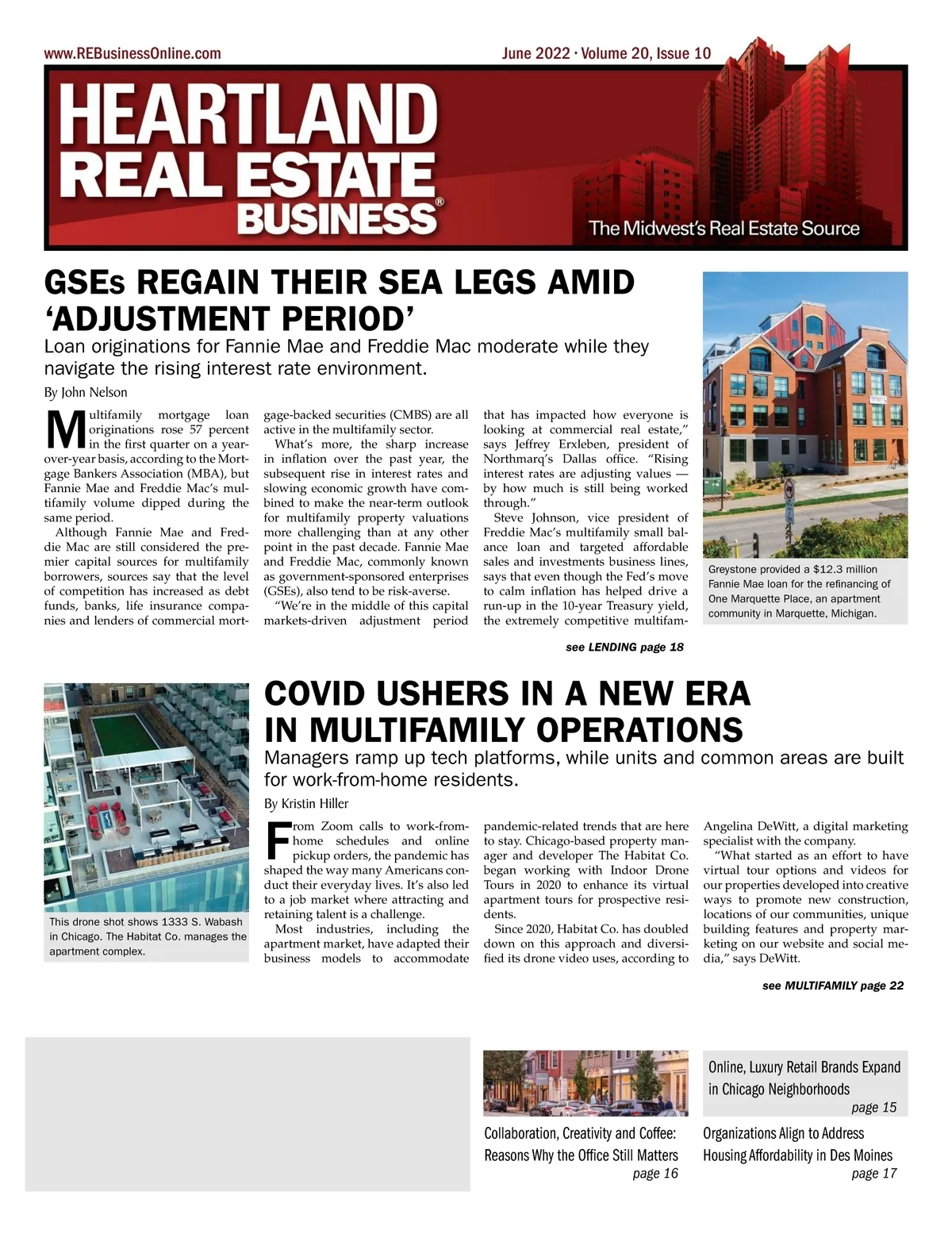
www.REBusinessOnline.com June 2022 • Volume 20, Issue 10 GSE S REGAIN THEIR SEA LEGS AMID ‘ADJUSTMENT PERIOD’ By John Nelson Loan originations for Fannie Mae and Freddie Mac moderate while they navigate the rising interest rate environment. M ultifamily mortgage loan originations rose 57 percent in the rst quarter on a year-over-year basis, according to the Mort-gage Bankers Association (MBA), but Fannie Mae and Freddie Mac’s mul-tifamily volume dipped during the same period. Although Fannie Mae and Fred-die Mac are still considered the pre-mier capital sources for multifamily borrowers, sources say that the level of competition has increased as debt funds, banks, life insurance compa-nies and lenders of commercial mort-gage-backed securities (CMBS) are all active in the multifamily sector. What’s more, the sharp increase in in ation over the past year, the subsequent rise in interest rates and slowing economic growth have com-bined to make the near-term outlook for multifamily property valuations more challenging than at any other point in the past decade. Fannie Mae and Freddie Mac, commonly known as government-sponsored enterprises (GSEs), also tend to be risk-averse. “We’re in the middle of this capital markets-driven adjustment period that has impacted how everyone is looking at commercial real estate,” says Jeffrey Erxleben, president of Northmarq’s Dallas of ce. “Rising interest rates are adjusting values — by how much is still being worked through.” Steve Johnson, vice president of Freddie Mac’s multifamily small bal-ance loan and targeted affordable sales and investments business lines, says that even though the Fed’s move to calm in ation has helped drive a run-up in the 10-year Treasury yield, the extremely competitive multifam-see LENDING page 18 Greystone provided a $12.3 million Fannie Mae loan for the re nancing of One Marquette Place, an apartment community in Marquette, Michigan. COVID USHERS IN A NEW ERA IN MULTIFAMILY OPERATIONS By Kristin Hiller Managers ramp up tech platforms, while units and common areas are built for work-from-home residents. F This drone shot shows 1333 S. Wabash in Chicago. The Habitat Co. manages the apartment complex. rom Zoom calls to work-from-home schedules and online pickup orders, the pandemic has shaped the way many Americans con-duct their everyday lives. It’s also led to a job market where attracting and retaining talent is a challenge. Most industries, including the apartment market, have adapted their business models to accommodate pandemic-related trends that are here to stay. Chicago-based property man-ager and developer The Habitat Co. began working with Indoor Drone Tours in 2020 to enhance its virtual apartment tours for prospective resi-dents. Since 2020, Habitat Co. has doubled down on this approach and diversi-ed its drone video uses, according to Angelina DeWitt, a digital marketing specialist with the company. “What started as an effort to have virtual tour options and videos for our properties developed into creative ways to promote new construction, locations of our communities, unique building features and property mar-keting on our website and social me-dia,” says DeWitt. see MULTIFAMILY page 22 Online, Luxury Retail Brands Expand in Chicago Neighborhoods page 15 Collaboration, Creativity and Coffee: Reasons Why the Of ce Still Matters page 16 Organizations Align to Address Housing Affordability in Des Moines page 17
Heartland Real Estate Business June 2022: Page 1